

Baystate Health, one of the largest employers in western Massachusetts, is on a cost-cutting journey. The nonprofit hopes to cut $60 million from its bottom line, according to MassLive. Since President Donald Trump signed his so-called “big, beautiful bill” into law last year, the hospital — which generates approximately $935 million a year in revenue — is incurring some $147 million in added expenses and lost reimbursements, in large part due to cuts to Medicare and Medicaid.
As a result, CEO Peter Banko — a veteran healthcare executive who most recently worked as the CEO of Centura Health in Colorado, Kansas, and Utah — has been sharpening his axe.
Since taking the helm of the not-for-profit health system in 2024 — a year in which he made $1.7 million in total compensation, according to the organization’s most recent tax filings — Banko has cut hundreds of jobs and turned to artificial intelligence to make up for lost productivity. When The Boston Globe first reported on Banko’s forthcoming book in March, the organization had cut nearly 400 jobs during his tenure. Since March, there have been more layoffs, amounting to around 500 jobs.
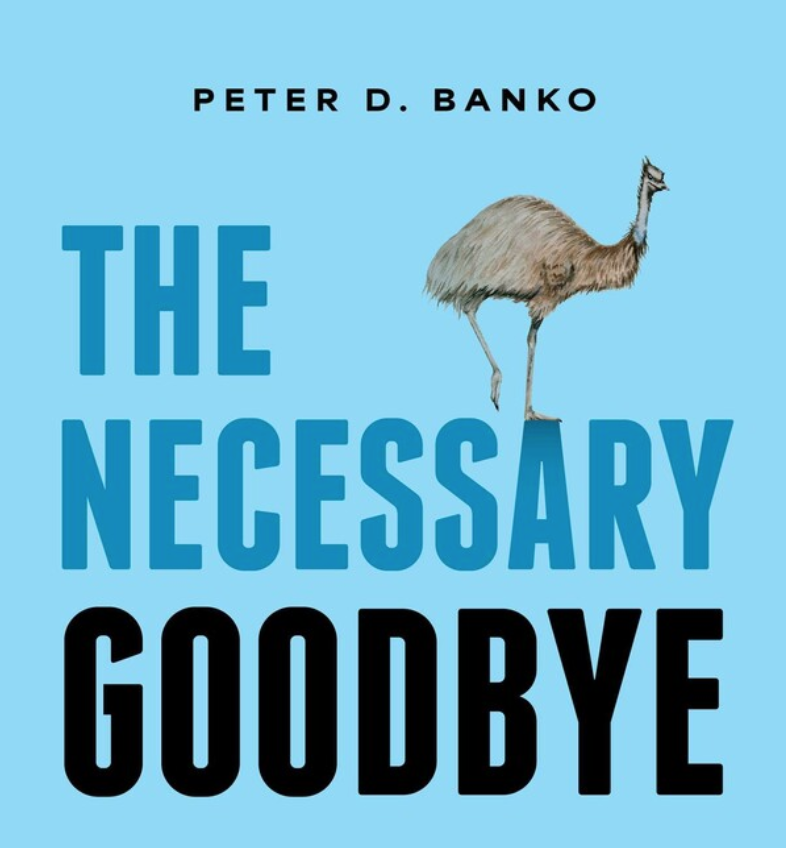
Banko’s role in these cuts has raised eyebrows, considering his new book’s title: “The Necessary Goodbye: How Great Leaders Fire with Clarity, Confidence, and Compassion.” Published in May by Forbes Books, the book’s blurb suggests it is “written for new and emerging leaders, aspiring executives, and anyone navigating real-world team challenges.” Situated perfectly within the genre of self-help for CEOs, the book is full of pseudo-intellectual justifications to fire subordinates and cover your ass doing it.
In other words, the book answers the question most vexing the everyman CEO or wannabe McKinsey junior partner: “How can you be a corporate wrecking ball and sleep at night?”
The book’s introduction foregrounds the history “The Necessary Goodbye” relies on. As Banko notes in his first two pages, our current political moment is the product of a reality TV program that dramatized a boardroom executive firing his lackeys for often trivial, vibe-based reasons. Banko laments that the phrase “You are fired!” (a misquote, but I digress) has been “ruined…for me (and for us).”
After obliquely referencing Trump’s infamous turn of phrase, Banko goes on to suggest in the following paragraph that there’s “nothing new” about firing people, linking the practice to “public executions” during the “Middle Ages” and “public hangings” in the “Old West.” To put it bluntly, Banko likens his “leadership tools” to capital punishment. For a book that is ostensibly about how to “fire with … compassion,” Banko fails to grapple with the moral stakes of the history he is referencing.
Over a year before the book was published, Banko was busted for frequently plagiarizing entries in a blog sent out to employees. According to The Boston Globe’s Jonathan Saltzman and Maren Halpin, who broke the story in May 2025, 20 of Banko’s blog posts contained “identical or nearly identical” passages to ones found in sources like ESPN, Sports Illustrated, Forbes, NPR, and Harvard Business Review. The authors noted that the blog contained “lessons from business, sports, and Banko’s own life, including the importance of telling the truth.”
The Globe’s reporting forced Banko to apologize to Baystate’s employees. The nonprofit’s board also announced that it had disciplined Banko, though it failed to disclose exactly how. After apologizing for plagiarism, Banko moved his blog over to a video format, where citation is less of a standard practice. However, as soon as “The Necessary Goodbye” was released in May, users on Reddit alleged several instances of plagiarism within it. Other users suggested that Banko may have used AI to help generate the text, which is not something I know how to prove. However, the book was mind-numbingly boring enough (not to mention hardly edited) to make this reviewer wonder if Banko received machine assistance or if his editor hated him. Perhaps both.
Banko’s text relies on psychoanalyst Carl Jung’s 12 archetypes. He has a chapter elucidating each one, writing about what staffers with attributes of these archetypes bring to the organization and why you might want to terminate them. In introducing the concept, he uses his deft skill as a corporate executive to compare each archetype to a consumer brand. The lover: “Think Häagen-Dazs”; the rebel: “Think about the branding of Harley Davidson”; the innocent: “Think Coca-Cola.”; the everyperson: “Think Ikea.” It goes on like this.
Banko additionally likens the innocent to the animated children’s show character Spongebob. He “teaches us that friendship is everything,” Banko writes. “Everyone needs help at some point.” But he goes on to say, “You are, undoubtedly, going to have to fire someone you don’t want to, someone you care deeply about. You will have to fire your SpongeBob.”
Pretty deep stuff.
I spent a long time trying to think through why Banko would rely on Carl Jung’s psychoanalytic framework for a sloppy book about firing people within a hospital system. Banko explains Jung’s thinking about archetypes as such: “Jungian archetypes are universal symbols or patterns in the collective unconscious of all of us. They are innate and inherited, and they shape all our thoughts, feelings, and behaviors.”
Take Banko’s interpretation at face value and you might think that our actions are guided by forces outside of our own agency, and we do not bear full responsibility for them. Take the same logic to its extreme and you might think: “I am destined to fire SpongeBob.” Of course this thinking is perfect catnip for an executive who would rather ignore politics and material conditions. Forget even the invisible hand!
Still, Banko’s politics do assert themselves within his Jungian archetype vignette chapters. In his chapter about the “everyperson,” he reveals his animosities toward labor unions. “I had to sit down with the board and my corporate leaders to share, in a painfully blunt way, that we were going to lose the union vote.”
It gets weirder. In the chapter about the “sage” archetype, Banko writes about bumping into Vice President Dick Cheney — whom he called “perhaps the most controversial sage in our era” — in a Texas hospital he worked at in 2006 after the VP shot his hunting partner in the face. After taking readers through the pros (he’s the “strong silent type”) and cons (“He is painted publicly as a power-hungry capitalist, seizing control and running a personal agenda”) Banko concludes: “Regardless of which side you sit on, Vice President Cheney was a Washington Sage and truth-teller who remained passionate about our democracy.”
Maybe that last part was his subconscious projecting.
After Banko makes his way through the archetypes, he dives into more boilerplate management platitudes and fundamentals. Here he writes chapters called “Be Kind, Not Nice,” “The Role of the Team,” and “Resistance is Futile.” Banko imparts the following advice in a subsection called “Be The Shark”: “When the decision is executed, move to the center to take on your prey. Swim short distances. Bite hard with confidence.”
Banko has been the shark. The Necessary Goodbye comes at a time when the Baystate system seems to be shedding jobs somewhat indiscriminately, regardless of the Jungian archetypes of those fired. As Baystate’s executives have slashed approximately 500 jobs, nurses The Shoestring spoke to believe that those “goodbyes” have impacted the quality of patient care with real material consequences.
Laura Heisig, an operating room nurse at Baystate Franklin and a union rep for the Massachusetts Nurses Association, has been trying to bargain with Baystate since September. Their asks include increased staffing in the emergency department, pay parity with other hospitals in the area, and retroactive pay since their contract expired.
When Heisig and I spoke earlier this summer, she explained that the emergency department had beds in its hallway and there were not enough nurses to cover those beds. A few days after our initial conversation in June, Heisig got word of more layoffs, this time of transport staff that help move patients within the hospital. She explained that these cuts “leave several units in the emergency department, on-call surgical services, ICU, med-surg even more short-staffed as now there is a new requirement to transport patients.”
The Shoestring was also able to interview Stephanie Hucker, a nurse practitioner who left Baystate’s Baystate Mason Square Neighborhood Health Center in July.
“Things right now are incredibly difficult,” Hucker said after a new round of staffing cuts earlier this summer. She painted a bleak picture of her office’s ability to provide care to people who need it most. “We are not really able to meet the needs of the patients that we care for. These are people in Springfield who have mental health issues, or they have social issues, or maybe they’re struggling with housing, or struggling to get food, and it takes time and resources to be able to care for those patients,” she said. “Furthermore, I think these recent cuts have affected our ability to be able to prescribe certain medications in a timely manner to treat diabetes or other chronic diseases. One of the big reasons is we’re not really able to manage the paperwork volume right now so people are waiting for prescriptions or medical leave forms.”
Hucker explained why she decided to leave Baystate after seven years.
“I no longer feel like I can provide care that I feel good about,” she said. “There’s been many providers who left my clinic within the past year. I think sometimes the story gets told as a story of burnout, like, ‘Oh, these primary care providers are burned out from the demands of community health,’ and for me personally that’s not true. I’m leaving to go to another community health center. I can’t provide care that I feel like really serves patients at Baystate right now in part because of the cuts that they’re making.”
Banko did not return a request to respond to these statements.
The staffing cuts Hucker describes will be offset by a new AI software from Oracle, which Baystate says will be used to increase productivity in areas like billing and medical records. As Banko described to MassLive, he foresees the AI agent “being able to schedule, being able to fill out your paperwork, being able to refill your prescriptions, being able to interact with your physician more real time through some AI agents.” Oracle’s tech will help Baystate take over Mercy Medical Center in Springfield and combine their systems, a deal which is finalizing this fall. Oracle is, of course, a multi-billion-dollar company owned by Trump ally Larry Ellison. In the lead up to the 2024 election, Ellison gave some $45 million to a pro-Trump super PAC and has been graced with many favors from the administration, including $500 million in contracts to build AI data centers.
In setting up the Jungian archetypes, Banko imparts that it is necessary to build one’s brand.
“A strong family commitment to social justice. Championing human dignity. Furthering the common good. Solidarity with the marginalized. That is my brand,” he writes.
In the same chapter, he defines one of Jung’s major archetypes “the shadow” as “the ideas, weaknesses, flaws, desires, instincts, and shortcomings we keep to ourselves and hide from the world.”
Perhaps, then, it is his Jungian shadow that is shoveling money to Larry Ellison while laying off the people who work in ICUs and medical records offices while he bolsters his own career with a book deal about how to fire people.
While Banko doesn’t have the political power to recover funds lost in Trump’s cost-cutting spree, his book provides the perennial reminder that whenever CEOs fall on hard times, they can always pivot to monetizing the phrase “you’re fired.”

Will Meyer is a co-founder of The Shoestring. His work has also appeared in various national publications including Columbia Journalism Review, Teen Vogue, The Baffler, The Nation, and other outlets.
- Will Meyer
- Will Meyer
- Will Meyer
- Will Meyer
- Will Meyer
- Will Meyer
- Will Meyer
- Will Meyer
- Will Meyer
- Will Meyer


