
It’s a development that will hit colleges and universities with “the impact of an earthquake.”
After the Trump administration issued a whirlwind of executive orders slashing funding for scientific research and inquiry, the National Institute of Health is facing major cuts and increasing uncertainty. In the face of these cuts, a state like Massachusetts stands to lose significant economic activity and suffer setbacks to its ability to make contributions to everything from biomedical research to public health.
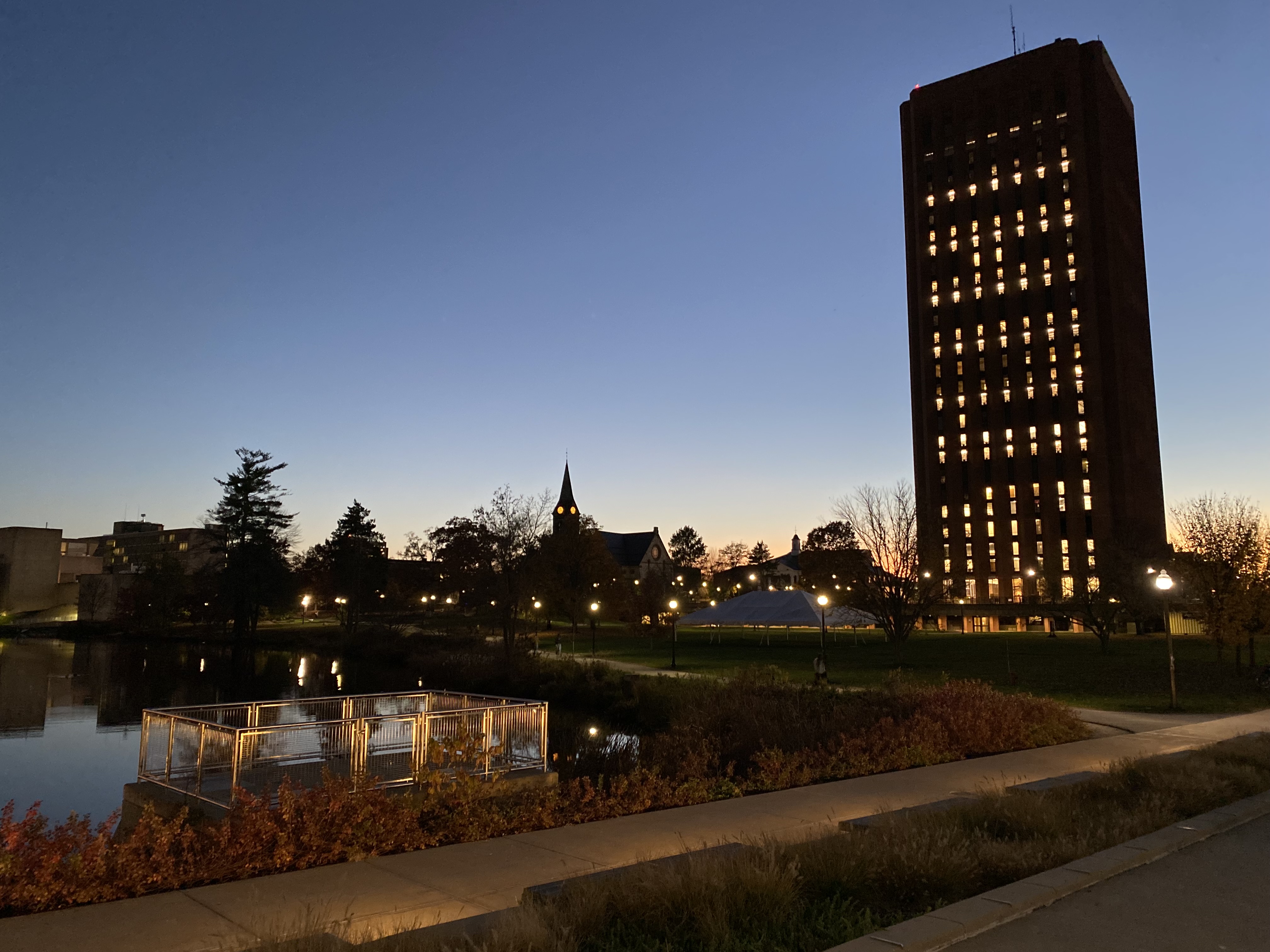
Many of these impacts will land close to home. Among Massachusetts’ top employers are academic research institutions that rely heavily on NIH grants. The University of Massachusetts Amherst, a top-tier “R1” research institution, has a research portfolio of approximately $260 million per academic year: around $180 million of this is federally sourced and $44.8 million comes from the NIH, according to a recent lawsuit filed against the NIH by 22 state attorneys general. According to the NIH RePORTER (Research Portfolio Online Reporting Tools), Baystate Health, based in Springfield, receives $7.7 million in NIH funding as well. Some of their projects explore important regional issues such as combating opioid abuse.
According to a recent report from the University of Pennsylvania’s Annenberg Public Policy Center, western Massachusetts stands to lose $48 million in economic activity should the proposal of a strict 15% cap on facilities and administrative costs take effect. The Trump administration has worked to cut those “indirect costs,” as they’re known, for both NIH and National Science Foundation grants.
“You can think about the impact the same way that you think about the impact of an earthquake,” said Edwin Boudreaux, a clinical psychologist and researcher at UMass Chan Medical School. “There’s going to be a lot of damage really close to the epicenter of that earthquake, and then as you move out from that earthquake, there’s less and less immediate and clear damage. But, depending upon the size of the earthquake, it could be that as you look further out from the epicenter, you still start to see major, major damage; aftershocks.”
Every dollar that enters the economy lives a lifetime: it is used by a carpenter to buy groceries from a farmer, it is used by the farmer to pay the mechanic for tractor repairs, the mechanic pays their rent, and so on. In western Massachusetts, universities and large medical research institutions play a vital economic role.
The 11 private colleges and universities operating in the region contribute over $3 billion to the economy annually and also support almost 20,000 jobs. Faculty, staff, and administrators are paid by their institutions and pour their money back into the local economy, keeping this cycle alive in the region.
Entering his second term, President Donald Trump has pursued what he has described as “America first” policies that purport to strengthen the U.S. economy by increasing economic activity within the country and eliminating what his administration has characterized as wasteful spending. The NIH is the single largest funder of public health research in the United States, making it a top target for Trump’s budget cuts.
However, NIH funding does not disappear into the void; it actively drives economic activity. Every dollar put into the NIH generates $2.56 in economic returns, according to a report from the organization United for Medical Research — a coalition of research institutions, health advocates groups, and private businesses. So as the NIH budget is cut, it is also cutting off the economic life cycle of this money. These losses are in addition to the personal impacts on scientists, researchers, administrators, and the patients they serve.
The role of the NIH in supporting the western Massachusetts economy
In 2024, the NIH awarded approximately $3.46 billion to fund public health research in Massachusetts, according to agency records. These grants supported almost $8 billion in statewide economic activity as well as 30,000 jobs. Most of that money was granted to research institutions in Boston and surrounding Suffolk County, while $277 million was granted to researchers in western Massachusetts.
Despite the gap in actual funding between this region and the greater Boston area, the rate of NIH funding per dollar of GDP in Hampshire County is the second highest in the state, trailing Suffolk County, according to a Shoestring analysis.

The presence of NIH funded research in an otherwise rural region comes courtesy of researchers putting months or years of planning labor into grants that have always been far from guaranteed.
“Even before, it already felt risky, like it doesn’t always work out…so now the uncertainty is just overwhelming,” said one researcher at a large medical teaching institute in Boston who preferred to remain anonymous over fear of losing funding for her lab.
In her experience, obtaining funding within the first few years after graduate school is critical for establishing a successful academic career.
“Two out of the three grants that were delayed in my lab were led by early career professionals, people just starting out in academia,” she said. For such professionals, the delay of grant reviews is not just an inconvenience, it is career-threatening.
The Shoestring relies on reader support to make independent news for western Massachusetts possible. You can support this kind of labor-intensive reporting by visiting our donate page.
Reductions to the NIH budget do not just impact researchers. NIH grants include both direct and indirect costs. Direct costs fund the researcher’s salary and immediate needs for the project itself. Indirect costs are awarded to the institution to support needs outside of the project.
“Without indirect costs, you wouldn’t have a building, wouldn’t have heat, you wouldn’t have any of the tools, the equipment that you would need to be able to run laboratory assessments,” said Boudreaux, the UMass Chan Medical School researcher. “The [institutional review board], my grants managers, administrators, people who are servicing the facility, their jobs could be threatened because a lot of their positions are covered by the indirect costs.”
On Feb. 7, the NIH announced a strict cap on indirect costs, limiting them to just 15%. Each institution negotiates their indirect cost rate with the NIH or other grantor representatives. UMass Amherst has a 61% indirect funding rate — of their total research portfolio funded by the NIH, $13.1 million are for indirect costs.
A recent lawsuit filed by Massachusetts and 21 other states outlines potential consequences of this cap. At UMass Chan Medical School in Worcester, the capped indirect funding rate will terminate $40 to $50 million in funding.
“It’s hard to imagine just how catastrophic a loss like this would be,” the anonymous researcher said.
Earlier this month, a federal judge in Massachusetts barred the Trump administration from instituting that 15% cap. However, the administration had actually requested that ruling so that it could move forward with an appeal, according to reporting from The New York Times.
Jim Kurose, a professor of computer science at UMass Amherst and former assistant director at the National Science Foundation in Washington, DC., said that while alternative funding sources may be available, they come with strings attached. Industry, for instance, often provides funding for innovative research.
However, “they have to deliver shareholder value to their shareholders,” he said. This typically results in studies being limited to just a few years, straining researchers’ abilities to carry on long-term research — for example, in medical research, comprehensive longitudinal studies ensuring the safety and efficacy of interventions over time. It also makes it more difficult to fund research not targeted at a company’s products or services.
Not just the money: impacts on public health
Experts are concerned that funding cuts to the NIH will impact local and national health care in addition to the economy. Without the federal government, many behavioral health studies and training for future clinicians would not be funded, they say.
“Drug companies are not interested in funding these types of training and studies,” the anonymous researcher said.
There is also a substantial threat posed to current patients. The NIH funds many clinical trials, which offer innovative medications and interventions for physical and behavioral health conditions. In recent weeks, many NIH and other federally funded public health grants have been abruptly terminated, including some clinical trials which had active enrolled participants.
For instance, the NIH recently terminated a nationwide 24-year research initiative to prevent HIV/AIDS in adolescents and young adults. The Trump administration abruptly withdrew $18 million from The Adolescent Medicine Trials Network, a research organization that manages studies across many U.S. states, including Massachusetts. The cancelled study offered innovative therapies to support patients with HIV/AIDS, a representative from the network said in a private message, leaving the participants in Massachusetts unable to continue their treatment.
“The question is, ‘What’s going to happen to the patients? Are they going to continue to receive the intervention? Are they going to continue to be followed up on?’” Boudreaux said. The protocol for managing these issues is unclear, he said, as it is atypical for active NIH grants to be terminated mid-intervention.
The experts who spoke to The Shoestring said that the public does not understand the full scope of NIH research and its impact on public health. A substantial number of the terminated grants studied vaccine efficacy, medication adherence for people with HIV/AIDS, health disparities among racial and ethnic minorities, and reproductive healthcare for women. The anonymous researcher pointed out that these studies were not “terminated for any scientific reason,” but for ideological reasons that are consistent with other social policies the Trump Administration has taken.
Reviewing this dynamic list of recently terminated grants, gathering data from the Department of Health and Human Services, NIH, and self-reports, some common themes are apparent: research looking at vaccine efficacy, COVID-19, HIV/AIDS, and LGBTQ+ health issues.
In recent remarks at UMass Chan, Gov. Maura Healey said the funding cuts “are very extensive, including supporting critical work in gene therapy, rare disease research, HIV research, digital medicine, neuroscience and more.”
“UMass Chan has held groundbreaking clinical trials of new genetic therapies for devastating conditions like ALS and so many other diseases,” Healey said. “But this kind of progress is now at risk, and with that, hope is being stripped away from patients and families.”
Locating the aftershocks in western Massachusetts and beyond
A post on the NIH’s X account claims the proposed indirect cost cap would save the federal government about $4 billion annually. Impacts on institutions vary by their size as well as their ratio of endowment funding, private funding, and public grants.
Proponents of the indirect cost cap believe this restructuring has the possibility of creating more efficient processes within the NIH. A directive from the NIH director’s office described the cuts as “vital to ensure that as many funds as possible go towards direct scientific research costs rather than administrative overhead.”
Institutions receiving larger proportions of federal funding may have to reprioritize their budgets by “hiring fewer faculty or cutting some services,” labor economist Michael Robinson told The Shoestring.
Many scientific researchers and institutional personnel who receive NIH grants, however, firmly believe the proposed policy will primarily serve to eliminate crucial medical research.
On a panel for Progressive Massachusetts, organizer Melissa Vargas likened support for scientific research to “clean drinking water — very popular and has tons of public support.” According to the Pew Research Center, 79% of adults agree that science has made life easier.
Resistance movements led by groups such as the Union of Concerned Scientists are one example of growing public discontent over Trump’s slashing of science-based initiatives. Locally, some protesters at a “Hands Off” rally in Northampton earlier this month held signs defending funding for scientific inquiry.
“Research brings hope to the human condition,” said Chancellor Michael Collins of UMass Chan in a press release following a visit from Gov. Maura Healey to highlight the cuts. “It is shocking to an academic community like ours that research would be attacked, particularly by folks who believe that America should be the best.”
This article was written by Smith College students in a data journalism course taught by Naila Moreira and Ben Baumer, in collaboration with The Shoestring’s editors.