

Larry Hansen has lived in the same house on Holyoke Street for the past 50 years. If he gets his way, it will soon be razed to the ground.
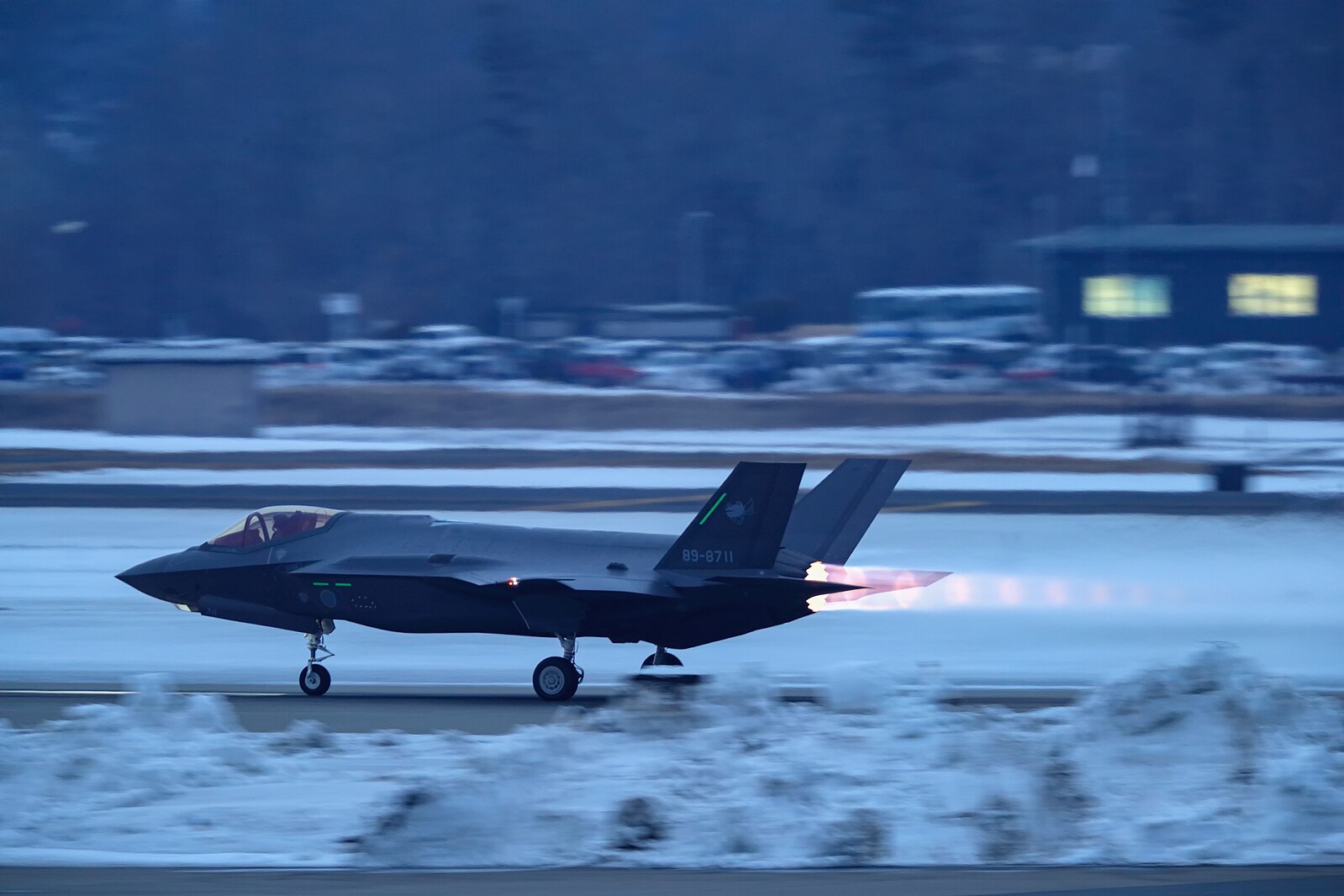
Hansen’s house is in the flight path for the 104th Fighter Wing’s F-15C jets out of Barnes Airport, a civilian airport owned by the city of Westfield that hosts the Air National Guard as a tenant. The noise from their multiple daily flights is a constant source of irritation and distress for him. By 2026, a fleet of newer jets, twice as loud as the F-15C, will be flying over Hansen’s house at nearly double the frequency they are now. He hopes that the city will buy his house and demolish it like they have others several miles down the road.
The Air National Guard’s noise study for the fleet upgrade, released in February, places Hansen’s residence within an area exceeding 70 DNL — a cumulative metric that includes all noise events occurring in a 24-hour period with a nighttime noise weighting applied to events occurring between 10 p.m. and 7 a.m., according to the National Guards’s noise study (p. 14). This classification makes the residence eligible for purchase and razing under a federal law concerning “airport noise compatibility planning.”
Hansen is the only civilian The Shoestring found who had read the draft environmental impact statement for the beddown — a military term usually referring to stockpiling of resources for quick use — of new jets. Westfield is one of three locations slated for fleet upgrades. Fresno, California, is also likely to receive a fleet of F-35As, and Belle Chasse, Louisiana, which lacks the proper infrastructure to support the most expensive fighter jet ever developed, is being considered to receive a fleet of F-15 EX jets instead. All in, these three upgrades will amount to nearly $7.5 billion in federal defense spending. Each jet costs between $80 and $100 million dollars.
The 104th Fighter Wing is responsible for providing 24/7 air support to defend against aerial threats in the Northeast. “We’re very proud of hosting that mission here to protect the northeast,” Airport Manager Chris Willenborg said in a phone interview.
(For example, in 2023, the 104th provided support for an F-22 Raptor from the 1st Fighter Wing at Langley Air Force Base, VA, which shot down a Chinese balloon which had drifted over Canada and the United States, marking the first air to air kill for the fifth generation F-22.)
The Air National Guard declined to disclose how many comments it had received on its environmental impact statement ahead of the planned publication of its final draft, scheduled for later this year. But if the website’s traffic data is any indication, it will likely be significantly less than similar projects that have been implemented across the country over the years, such as the 800 “substantive” comments received when F-35As were beddown about four hours north in Burlington, Vermont.
Two public meetings on the topic were held in March: a virtual one, which had about 30 attendees, and an in-person meeting, which Willenborg said had about 200 attendees. Willenborg said he did not recall any members of the public making a comment during allotted time, although postcards were also supplied to attendees, on which they could submit comments.
Outside of these meetings, and without visiting the website, parties could still have submitted comments via email or letter before April 5. Copies of the environmental impact statement are available at the mayor’s office, where this reporter was told he was the first person to request to review it, and the Westfield Athenaeum, where reference librarians said they did not know how many people had reviewed the document.
Under NEPA guidelines, the military need only respond to “substantive” comments about the proposal, defined as comments that question the environmental impact statement’s accuracy or methodology, or present new relevant information. This is nearly impossible to do without having read the statement, or at least parts of the 800 page draft, 500 pages of appendices, and another several hundred pages of supplementary material the draft cites from.
What will almost certainly happen is the environmental impact statement will be published and then, 30 statutorily mandated days later, the Department of Defense will issue a formal letter of determination authorizing the beddown of Lockheed Martin’s single engine fighter. By 2026, Barnes will be home to 21 of these planes, which cost $42,000 an hour to operate, and are scheduled to fly nearly twice as often as the F-15Cs they’ll replace. Upgrades to Barnes will include larger storage facilities for jet fuel to accommodate the increased number of flights.
The military could also choose to take a “no action alternative” at any of the locations, and while this is an exceedingly rare decision, it is not unprecedented. A no action alternative was chosen in 2014 over a plan to beddown 53 F-35s at Eglin Air Force Base in Florida. While noise pollution and community feedback were cited as the reasons, in 2014 the ironically named Lightning II was not cleared to fly in thunderstorms. (In April of this year, the F-35 was approved for all-weather flight.)
A dubious website
In addition to possible noise concerns, The Shoestring found that the website related to the Air National Guard’s F-35, angf15ex-f35a-eis.com, project was not compliant with the DOTGOV Online Trust in Government Act of 2020, which requires executive branch agencies to adopt a government domain name for federal websites, services, and communications, such as .gov or .mil. The website provides digital copies of the draft environmental impact statement and a wealth of supplementary documentation about the project. Visitors to the site could also, during a 45-day window between February and April, have submitted comments for review as provided for by the National Environmental Protection Act.

A Department of Defense public relations coordinator told The Shoestring that the department was “looking into whether the website was indeed in their custody” — but one hour after The Shoestring inquired about the domain issue, the website was down for maintenance. As of Sept. 12, it appears to be back online, unchanged including a note of the last update being in June.
A Whois lookup through the Internet Corporation for Assigned Names and Numbers (ICANN), a global nonprofit organization headquartered in the United States responsible for ensuring the internet’s stable and secure operation, reveals the website was registered to an anonymous individual through Perfect Privacy, LLC, a service offered by the Florida based company Network Solutions. A representative of the company was unable to access registrant information without being provided an access pin.
In attempting to contact project manager William Strickland, The Shoestring found that two phone numbers associated with him were out of service, and emails to several addresses believed to be Strickland’s went unanswered. The phone number provided for Strickland by the 147th Fighter Wing of the Air National Guard was disconnected. On Sept 16, Strickland sent an email to The Shoestring which read, “This is the first communication I recall seeing from you. I moved to a different job in early July and am no longer the POC [point of contact] for this project.” Subsequent emails were not replied to.
The Air National Guard declined to provide copies of public comments made regarding the proposed F35-A project, and the National Guard Bureau told The Shoestring it “has not been tracking the number of downloads” of the environmental impact statement.
Because the website used Google fonts, The Shoestring was able to obtain traffic data using Semrush, a popular online SEO and website analytics tool. The public-facing project website for these three proposals by the Air National Guard saw, at most, 41 unique visitors during the 49 days between February and April when the public could submit comments on the proposal. Competing products appeared to corroborate this data, and three internet marketing professionals confirmed The Shoestring had interpreted the results correctly.
On Aug. 1, The Shoestring emailed the Air National Guard asking if they disagreed with our findings. Despite numerous other correspondences with the agency, this email was not replied to, nor were other subsequent follow ups about its content. The Shoestring invites correction from the Air National Guard if our analysis is incorrect.
After several attempts to contact Governor Maura Healey, her press secretary wrote “thanks for reaching out, I’ll refer you to the EPA for comment on their NEPA process.” As governor, Healey is Commander in Chief of the Massachusetts National Guard.
Very loud freedom
Public outcry when a military base replaces its old planes with new, louder ones is common. Like in Burlington, it happened locally when in the late 1980s Westover Air Reserve Base announced plans to replace their fleet of C-130s with sixteen C-5 Galaxy cargo jets, the military’s largest plane. Grassroots advocacy groups were formed and the change was loudly protested, ultimately culminating in the formation of a “restoration advisory board” — a group consisting of both private citizens and local military officials to discuss environmental restoration of current or former military installations. Local residents also filed an unsuccessful lawsuit. (Barnes also has a restoration advisory board, which meets regularly, unlike that at Westover, a member of which said he did not know when the last time a meeting was held.)
Why seemingly so little attention has been paid to the forthcoming Westfield project is unclear.
In August, the Burlington City Council considered a resolution to formally petition Vermont Gov. Phil Scott and U.S. Sen. Bernie Sanders to ask Congress to change the airport’s mission and have its F35s removed. The motion is not the first from Burlington, which is not in the airport’s flight path. Neighboring Winooski, which is directly in the flight path, has passed similar resolutions, so far to little effect. In 2021, Colin Flanders of the Burlington-based weekly newspaper Seven Days recorded an F-35 at 110 decibels as it passed over the Winooski Public Library. 85 decibels and above is generally considered loud enough to cause hearing loss; the louder the sound, the less exposure time is needed to damage one’s hearing. Exposure to 110 decibels can be dangerous in a matter of minutes.
Most Westfield residents The Shoestring spoke to were at least aware that new planes were coming, and most knew they would be louder than the F15-Cs they’ll be replacing. But few were aware the F-35A is about twice as loud as an F-15, in-part due to their single engine design, which requires higher levels of thrust. The result will be a significant expansion of the area of the city which will be exposed to 65 decibels or higher.
“They’re gonna do whatever they want anyways, man, you know,” said Justin Welch, a resident of Westfield in the neighborhood surrounding the Savage Arms firearms-manufacturing plant. His house shakes when the current F15-Cs fly. Welch told The Shoestring that while he knew about the new planes, he was unaware of the now-closed public comment period.
“No, we’re just left in the dark, you know? We don’t know anything,” said Robert Gauthier, a veteran who lives in the same house. The house itself has received no improvements to help dampen the noise. Noise reduction measures are provided for under federal law.
“We tried to look into it and they were just like, ‘Oh, you know, the government stopped doing grants,” Gauthier said.
“It’s a voluntary program,” Willenborg, the airport manager, said. Under FAA regulations, Barnes cannot begin applying for noise mitigation grants until the Air National Guard issues an official letter of determination, something it can only do 30 days after the publication of the final draft of the environmental impact statement.
Another resident of that neighborhood who was not home when The Shoestring knocked on their door later called to report their house also shook. She was excited that there was an upcoming meeting about the noise. That meeting, scheduled for Aug. 8, was canceled after the airport commission held a special meeting a few days prior in order to meet a deadline for a grant proposal that required approval of the City Council, according to Willenborg.
But some residents, even those whose houses shake, don’t consider the noise bothersome.
“The sound of freedom” is how Westfield resident Wayne, who declined to give his last name, phrased it as we stood in his driveway on Holyoke Street. Wayne’s stretch of the street is in the direct flight path of Barnes and will see an increase in its “day-night average sound level — an averaged measure of noise throughout a 24-hour period — to 65 decibels or higher. Even prior to the current fleet of F-15s, some houses were purchased and razed on Holyoke Street under the government’s noise-planning program. Because this is voluntary, the effect has been a smattering of vacant lots surrounded by residences.
Asked what he thought about the fact that his house was in the zone designated as soon to be subject to very loud “freedom,” Wayne didn’t seem to mind.
“You get used to it,” he said, adding that he even enjoys the swaying of trees nearby whenever the 104th Fighter Wing comes in for landing — typically an event that happens multiple times a day.
“Besides,” he said as he cracked open a Coors Light and leaned against one of the two identical, seemingly brand new, white Ford F-350s in his driveway, “the military is gonna do what they’re gonna do.”
“Plus,” Wayne added, “I stand to make a bunch of money off this.”
Wayne is a contractor, and the new construction required to accommodate the fleet of fifth generation fighter jets is good business for him. In addition to the planes themselves, which will cost around $2 billion, infrastructure improvements are needed, which will cost around $20 million.
Wayne’s not the only one who knows the “sound of freedom.” Chris Clark heard it often throughout high school in Westfield.
“It’s a colloquial term for people in the region to describe the disruption of the jets,” said Clark, a Westfield native who recently began working towards a public health PhD at Harvard University and also serves on the Barnes Restoration Advisory Board. Clark said that the topic of F-35s didn’t come up much during their meetings. “They consistently remind us that the focus of the RAB is only PFAS contamination,” he said. “Personally, I think that this money [for the new jets] is better spent elsewhere.”
Another member of the Barnes Restoration Advisory Board, state Sen. John Velis, refused several requests for comment made through his press agent.
A final version of the environmental impact statement for beddowns in Westfield, Fresno, and Belle Chasse is scheduled for publication later this year.
This article has been updated to clarify Governor Maura Healey’s relationship to the National Guard.
This article is being published under a Creative Commons Attribution-ShareAlike 4.0 International license. Anyone is free to share and adapt this text in any way they like for both commercial and non commercial purposes, but you must give appropriate credit and indicate if changes were made. If you release an adapted version of this article, you must do so under this same license.
If you make changes you consider to be fixes to grammatical errors or factual inaccuracies, please kindly email theshoestringmag@gmail.com.
The Shoestring is committed to bringing you ad-free content. We rely on readers to support our work! You can support independent news for Western Mass by visiting our Donate page.

Jonathan Gerhardson is a journalist in western Massachusetts.
Email: jon.gerhardson@proton.me